

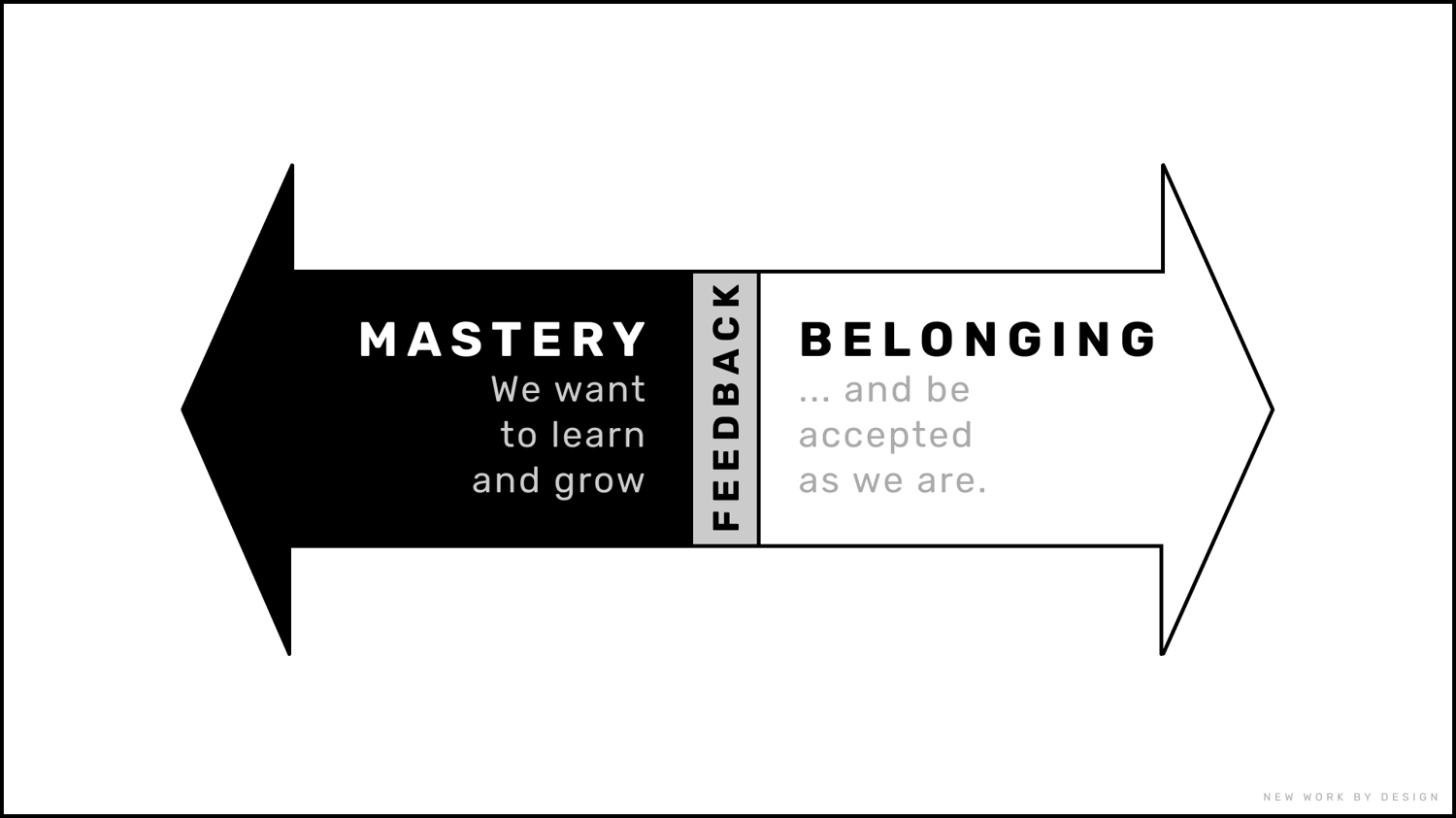
Feedback is a strange thing. We seek it because we want to grow—but we also avoid it because we want to feel accepted as we are.
That’s because feedback sits at the intersection of two core drivers of intrinsic motivation:
🎯 Mastery - the need to grow
🤗 Belonging - the need to be seen, valued, accepted
And this is where a paradox emerges.
On one hand, we crave growth. We want to improve, to stretch, to master new and existing skills.
On the other hand, we want to feel accepted as we are, without pressure to change in order to fit in.
Choosing one over the other comes with unintended downsides.
🎢 Emphasizing mastery while neglecting belonging leads to pressure.
🌈 Emphasizing belonging while neglecting growth leads to stagnation.
Great feedback pays into both.
To resolve this paradox the key is to:
🔑 Focus advice on what someone could do differently, never criticize who they are.
🔑 Lead with genuine care, so they don't fear exclusion.
🗣️ So for instance, you might say "I know this might be hard to hear, but I believe it’s important for your success. When you talked over me in the meeting, it shut me down and kept me from contributing fully. I'd really appreciate if you could let me finish speaking before jumping in."
🎢 But not: "You’re always so self-centered in meetings." (Criticizing the person, not the behavior)
🌈 And also not: ""It’s fine, don’t worry about it." (When it’s not fine.)"
🥪 How is this different from the dreaded "shit sandwich"? You don't have to hide a critique between two compliments. This technique often comes across as fake and insincere. Instead of trying to cushion the blow, lead with care, then follow with clarity.
Great feedback isn't a trade-off between mastery and belonging—it nurtures both 🎢 🌈
🧪 A simple experiment
Try this with a colleague this week:
- Start with genuine care to feed belonging: "Can I share sth with you that I think will help you improve?"
- Add an advice to feed mastery: "One way you could have even more impact might be…<describe what they would do differently>"
- Notice their reaction. Are they more open, more engaged, more thoughtful?
🤓 Fun fact
Your brain processes social rejection—including poorly delivered feedback—in the same brain regions that register physical pain. The dorsal anterior cingulate cortex (dACC), typically active when you stub your toe or bump your elbow, also lights up when you feel left out or criticized. Evolutionarily, this overlap helped us survive: being excluded from the group could be as dangerous as injury.
🤔 What if…?
…feedback came in the form of a personal soundtrack? Every action you took added a note to your theme song, and people could “hear” the harmony—or dissonance—you created. Imagine giving feedback by remixing someone’s theme song into an even more resonant melody.
If you want to receive visualized concepts like this with simple experiments in your inbox when they come out on Monday mornings, sign up at visuals.newworkbydesign.com
Comments ()