

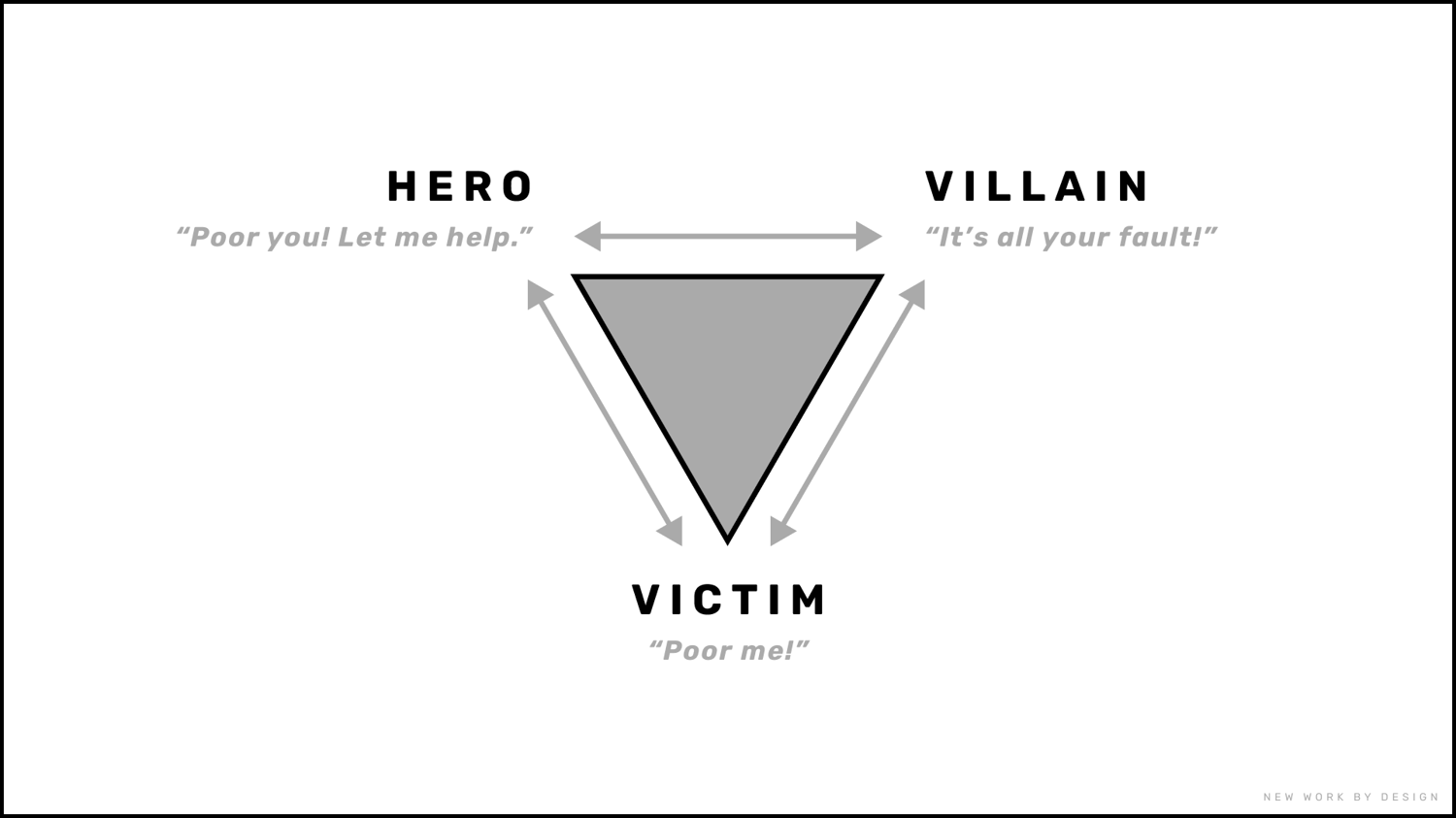
The Drama Triangle is a common pattern in relationships that, once understood, can help you defuse drama and foster more productive interactions with your colleagues (and people in general).
The Drama Triangle is a model of human interaction developed by Dr. Stephen Karpman. It illustrates three roles people unconsciously assume in a conflict: Victim, Villain (aka Persecutor), and Hero (aka Rescuer). None of these roles are useful in resolving the conflict.
- Victim: Feels oppressed and helpless.
- Villain: Blames or criticizes the Victim.
- Hero: Wants to save the Victim, often enabling their victimhood.
Workplace example: In planning meetings, John often plays the Victim, complaining about unrealistic deadlines. His topic lead, Sarah, assumes the Villain role by criticizing his work ethic. Emily, another team member, steps in as the Hero, taking on some of John's tasks. This dynamic leads to a toxic work environment, where problems are not effectively addressed, and resentment builds among team members.
Awareness benefit: Recognizing these roles helps individuals step out of these patterns.
- John might realize his potential to solve issues proactively. Stepping out of the Victim and into the Creator role.
- Sarah could learn to provide constructive feedback. Stepping out of the Villain and into the Challenger role.
- Emily could encourage John's autonomy rather than enabling dependency. Stepping out of the Hero and into the Coach role.
A simple experiment
Go through 5 of your closest work relationships. Write each person’s name on a piece of paper.
- Are you in a Drama Triangle with these people?
- Are you placing yourself in the Drama Triangle at your own will or are these people putting you in the there?
- What are the patterns?
- How can you empower these relationships?
Comments ()