

Do you ever start your workweek with a sense of tension, already bracing for the stress ahead? Balancing deadlines, complex collaborations, and occasional conflict can make maintaining our well-being a real challenge.
While a vacation or meditation are great ways to recharge, we often don’t have time to step away and take care of ourselves. That’s where the physiological sigh comes in — a simple, powerful technique to instantly calm yourself down.
The physiological sigh
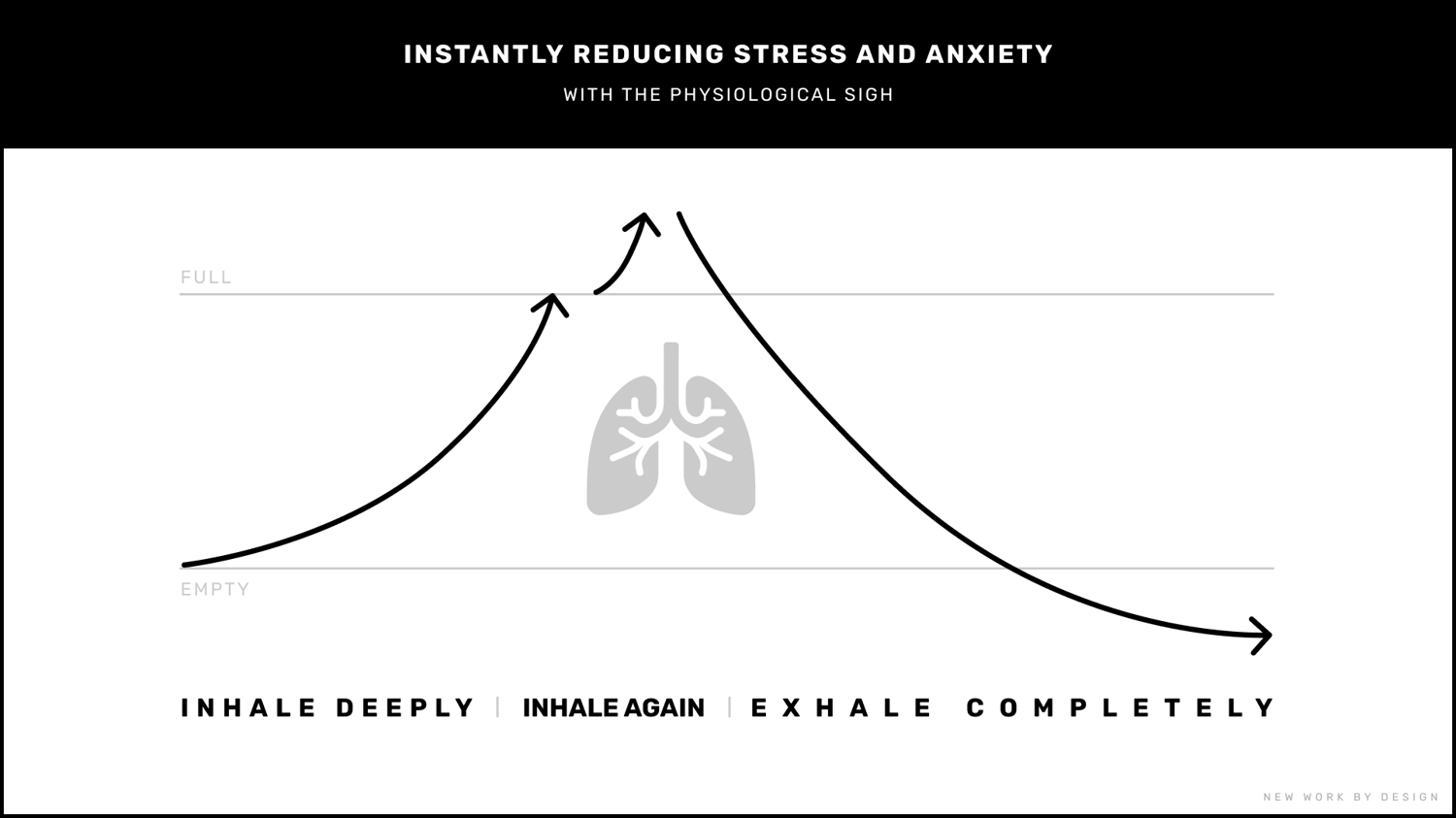
The physiological sigh is your body’s natural way of relieving stress fast. This breathing technique helps regulate CO2 levels, lowers your heart rate, and activates the parasympathetic nervous system, which promotes relaxation and a sense of calm. You can observe it occurring naturally in dogs just before falling asleep or babies calming down after a big upset.
Here’s how it works:
- Inhale deeply through your nose, filling your lungs and expanding your diaphragm.
- Inhale again sharply, on top of the first inhale.
- Exhale completely through your mouth, slowly releasing all the air.
In just one or two breaths, you can significantly reduce stress and anxiety, whether it’s before a big presentation or tackling a tough deadline.
Why this matters for teams
While the physiological sigh is a personal tool, its benefits ripple through teams. Stress is contagious. When one person feels overwhelmed, it affects the whole group. The good news? Calmness is contagious too. When you regulate your stress, you help set a more relaxed, focused tone for your team.
So, when you take a physiological sigh, you’re not just doing it for yourself—you’re doing it for everyone around you.
A simple experiment
This week, whenever you notice stress in your body (e.g. shallow breathing, muscle tension) or mind (e.g. racing thoughts, anxiety) pause for just a moment and take one or two physiological sighs. Notice and appreciate how your body and mind feel afterward. Then, tackle your challenges with renewed clarity and calm.
If you want to receive visualized concepts like this with simple experiments in your inbox when they come out on Monday mornings, sign up at visuals.newworkbydesign.com
Comments ()