

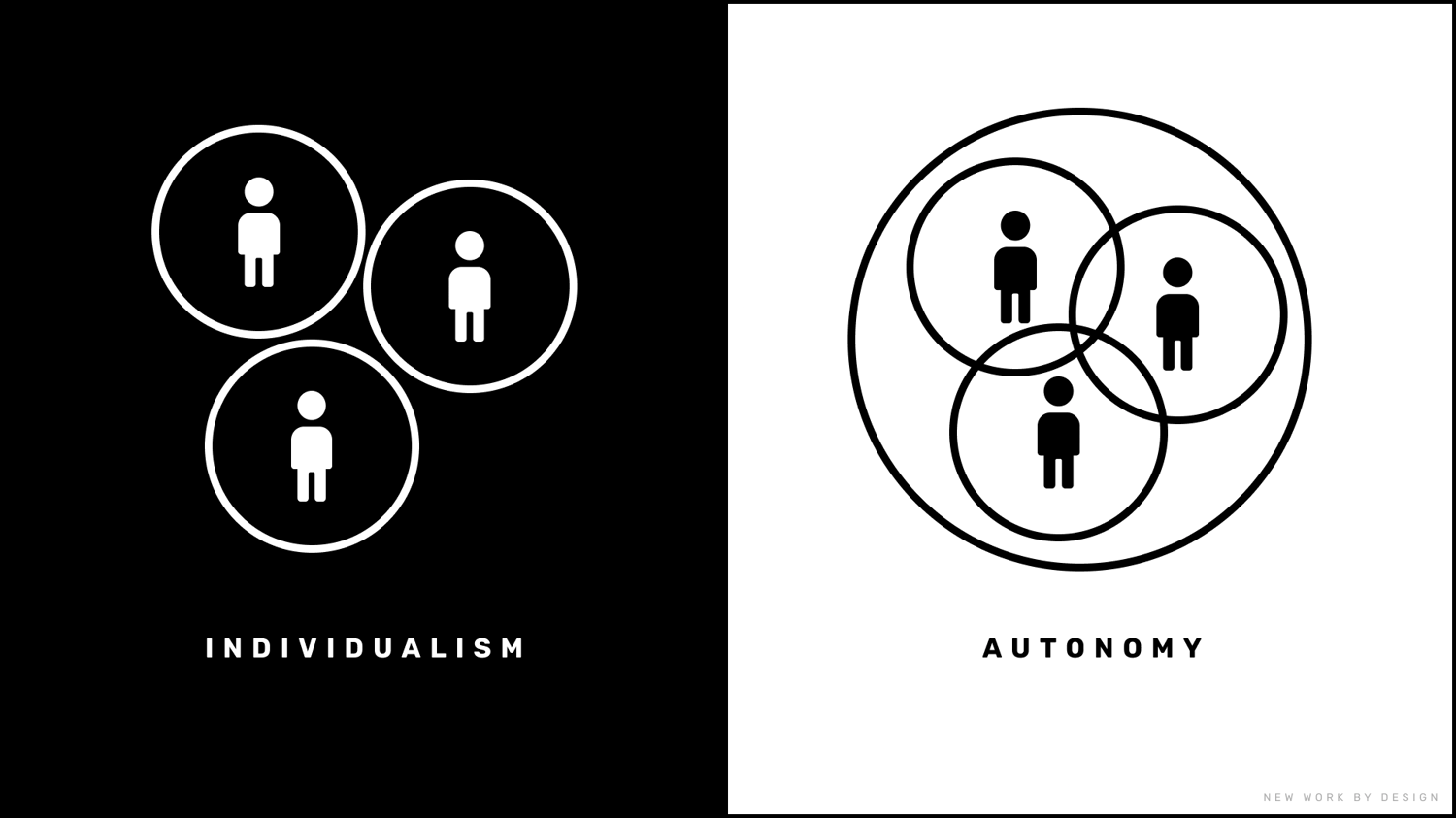
Many people think individualism and autonomy are the same. After all, both seem to emphasize personal freedom, self-reliance, and independent decision-making. But according to Self-Determination Theory (SDT), they are fundamentally different—and understanding this distinction can change how we design organizations that foster true motivation and fulfillment at work.
What’s the difference?
Individualism is about prioritizing oneself above the collective. It’s the “I do what I want” mindset, often associated with self-interest, competition, and detachment from social obligations. While individualism can promote personal ambition, it can also lead to isolation, lack of cooperation, and a “winner takes all” mentality in workplaces.
Autonomy, on the other hand, is about self-authorship. It means acting in alignment with one’s values and interests—but not in opposition to others. Autonomy acknowledges our interdependence with colleagues, teams, and communities. It fosters motivation and engagement, not through selfishness, but through a sense of ownership over one’s actions within a shared purpose.
Why Does this matter at work?
- Autonomy fuels intrinsic motivation: SDT research shows that people are most motivated when they feel a sense of autonomy while feeling connected to others—not when they are left to fend for themselves as isolated individuals.
- Individualism undermines collaboration: A culture of individualism leads to silos, disengagement, and a lack of trust. This happens because when individuals prioritize personal success over collective goals, cooperation diminishes, and people become more focused on competition rather than shared outcomes.
- Autonomy supports well-being, individualism can lead to burnout: When employees have autonomy, they feel more control over their work, leading to greater job satisfaction. Individualism, however, often leads to stress, loneliness, and a hyper-competitive culture.
Example: Two work environments
Imagine two companies:
🏢 Company A: The individualist culture: Employees are encouraged to compete for promotions, bonuses, and recognition. Collaboration is seen as secondary to personal achievements. Employees often work in isolation, and trust is low. While some thrive, others feel disconnected and exhausted.
🏢 Company B: The autonomous culture: Employees are given clear goals but the flexibility to decide how to achieve them. Teams collaborate, but each person has control over their role. People feel empowered to make decisions that align with both their interests and the company’s mission.
Putting yourself in those companies, how would you feel?
🧪 Experiment: This week, ask yourself and your team:
- Do you feel free to make meaningful choices at work?
- When you make decisions, are they in alignment with your values and interests?
- As a company, do we encourage autonomy or individualism? How so?
🤓 Fun Fact: Research shows people feel less stressed and more engaged when they have autonomy at work—but individualism actually increases stress levels. It turns out that having choices is freeing, but feeling disconnected from others is exhausting!
🤔 What if...? What if organizations flipped the script and based promotions not on individual performance but on how well someone enabled others to succeed? Imagine a workplace where recognition wasn’t about standing out but about lifting the whole team higher.
If you would like my support with creating a culture that promotes autonomy, e.g. with my leadership program, send me a message at manuel@newworkbydesign.com.
If you want to receive visualized concepts like this with simple experiments in your inbox when they come out on Monday mornings, sign up at visuals.newworkbydesign.com
Comments ()