

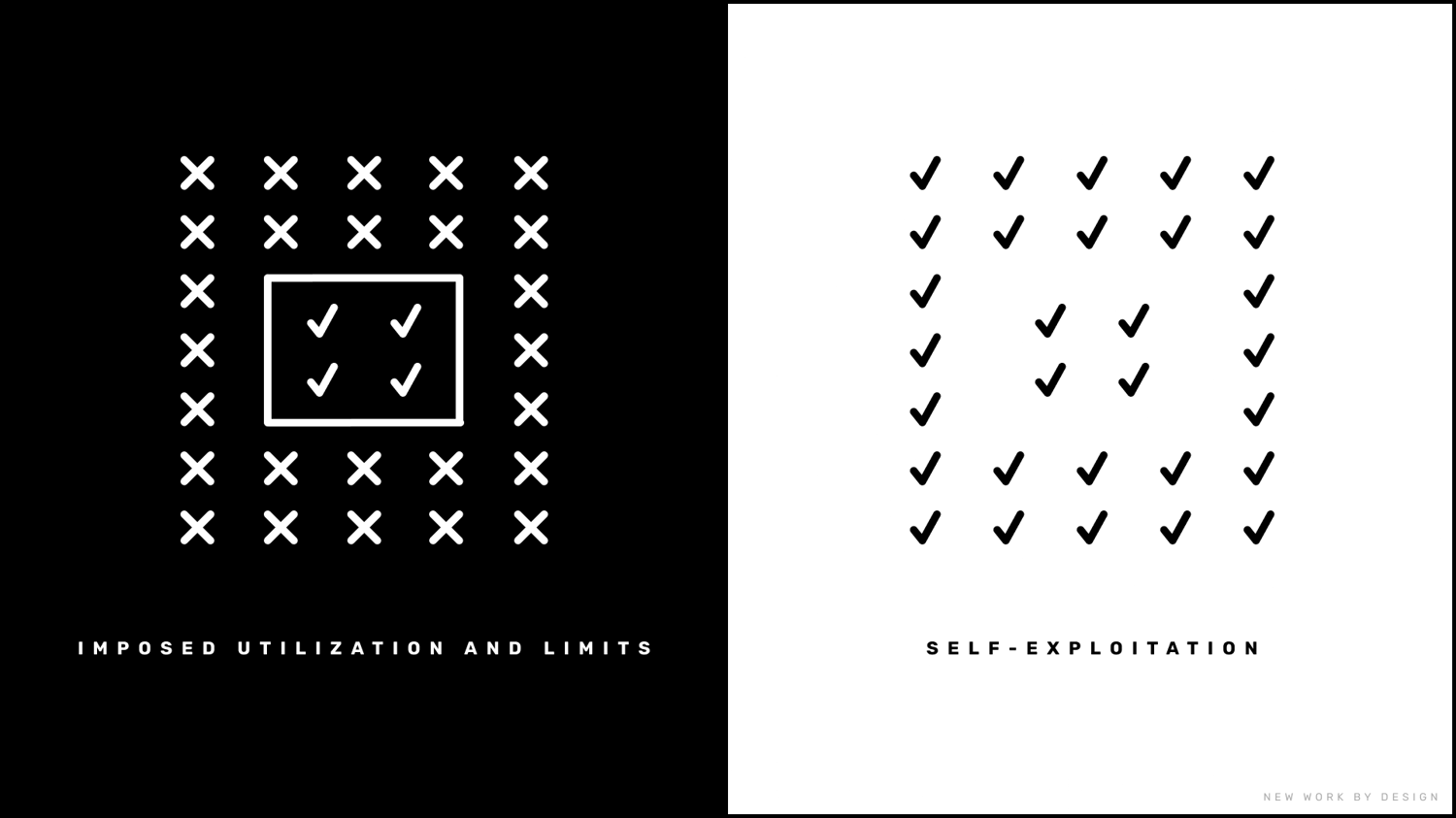
Let's talk about overwork. It happens both in hierarchical and self-organized organizations, but it manifests in different ways.
Hierarchical organizations
In hierarchical companies, overwork feels imposed. We fall into a victim mentality, with clear targets for our frustration: supervisors, the system, and its inefficiencies. There is a sense of helplessness and lack of control over our workload. We are hindered from adding value in areas outside our defined roles because they are "none of our business." This sucks!
Self-organized organizations
In self-organized companies, overwork is self-inflicted. We fall into a hero mentality, feeling the need to save the day and get involved in everything. The freedom to add value wherever we see fit leads to an overwhelming workload, where our plates become way too full. This sucks, too!
With great power comes great responsibility
Without imposed limits, individuals must manage their own workloads. This high degree of self-responsibility can be motivating and fulfilling. However, it also carries the risk of self-inflicted overwork. A former colleague aptly termed it the "invitation to self-exploitation."
A simple experiment
- Reflect on your workload and the level of stress you feel because of it.
- Identify external pressure contributing to your workload. Is it coming from supervisors, organizational inefficiencies, or unclear boundaries?
- Identify your own choices contributing to your workload. Are you taking on too much responsibility voluntarily? Are you setting realistic boundaries for yourself?
- Share your findings with a trusted colleague. Ask for their perspective on their own experiences with overwork. Exchange strategies for managing workload and setting boundaries.
If you want to receive visualized concepts like this with simple experiments in your inbox when they come out on Monday mornings, sign up at visuals.newworkbydesign.com
Comments ()