

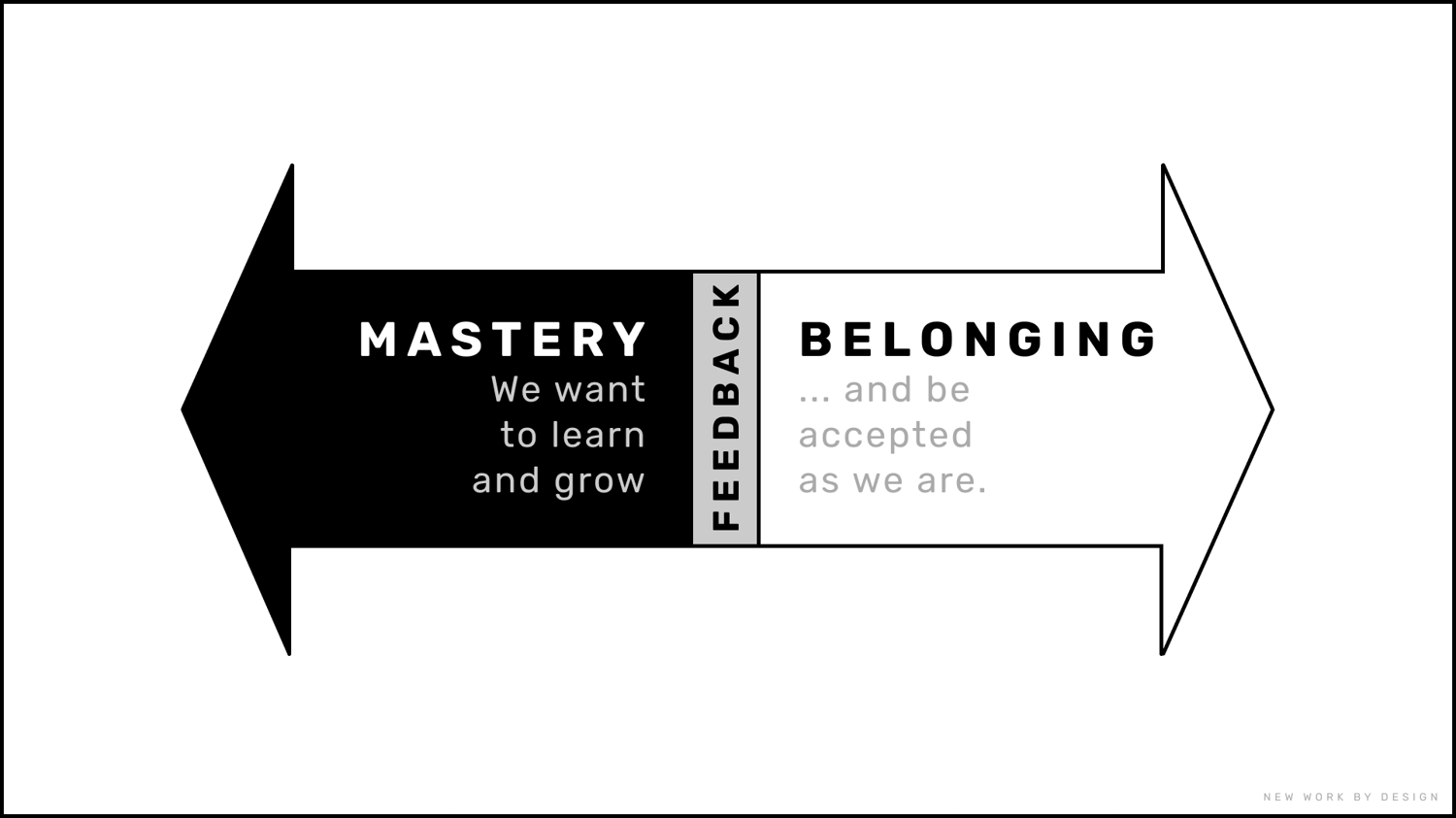
Feedback is a strange thing. We crave it because we want to grow—but we also fear it because we want to be accepted as we are.
Feedback sits at the intersection of two core drivers of intrinsic motivation: mastery and belonging. And this is where a paradox emerges.
On one hand, we crave growth—we want to improve, to stretch, to master new and existing skills. On the other hand, we also want to be accepted as we are, without feeling like we need to change to fit in.
Great feedback pays into both mastery and belonging.
When facing a paradox, I always think of my favorite quote from Nils Bohr, the Danish physicist who revolutionized our understanding of atomic structure and quantum mechanics:
"How wonderful that we have met with a paradox. Now we have some hope of making progress."
Paradoxes, rather than being obstacles, invite us to deepen our understanding and find a perspective that integrates both sides.
When it comes to feedback, this means: We can
- give advice on what someone could do differently to make their contributions more valuable while, at the same time,
- appreciating them for who they are.
Example: "I appreciate your sensitivity—it allows you to pick up on team dynamics and be attuned to how everyone is feeling. One way you could contribute this strength more is by speaking up when you notice tensions rising in a discussion, helping steer the team back toward constructive dialogue."
Another example: "I admire your passion for our projects—you bring so much energy and creativity to the team. One thing that could make an even bigger impact is giving others more space to share their ideas in meetings. If you make room for quieter voices, you'll help foster even stronger collaboration."
Great feedback isn't a trade-off between mastery and belonging—it nurtures both.
🧪 A simple experiment : This week, either in person or in writing, give one colleague feedback that helps them grow while appreciating them for who they are. Notice how they react. I promise, you are going to make their day—and maybe yours, too. How does it feel to give feedback that nurtures both mastery and belonging?
🤓 Fun Fact: The etymology of "feedback" comes from early cybernetics, where it described how machines self-regulate. The term was first widely used in engineering before it found its way into psychology and organizational development. This means feedback was always about continuous learning and balance.
🤔 What if: Imagine, we invented a quantum feedback mirror, a device that, when spoken into, whispers back the precise words that will elevate the listener to their highest potential while making them feel fully seen and loved.
If you want to receive visualized concepts like this with simple experiments in your inbox when they come out on Monday mornings, sign up at visuals.newworkbydesign.com
Comments ()