

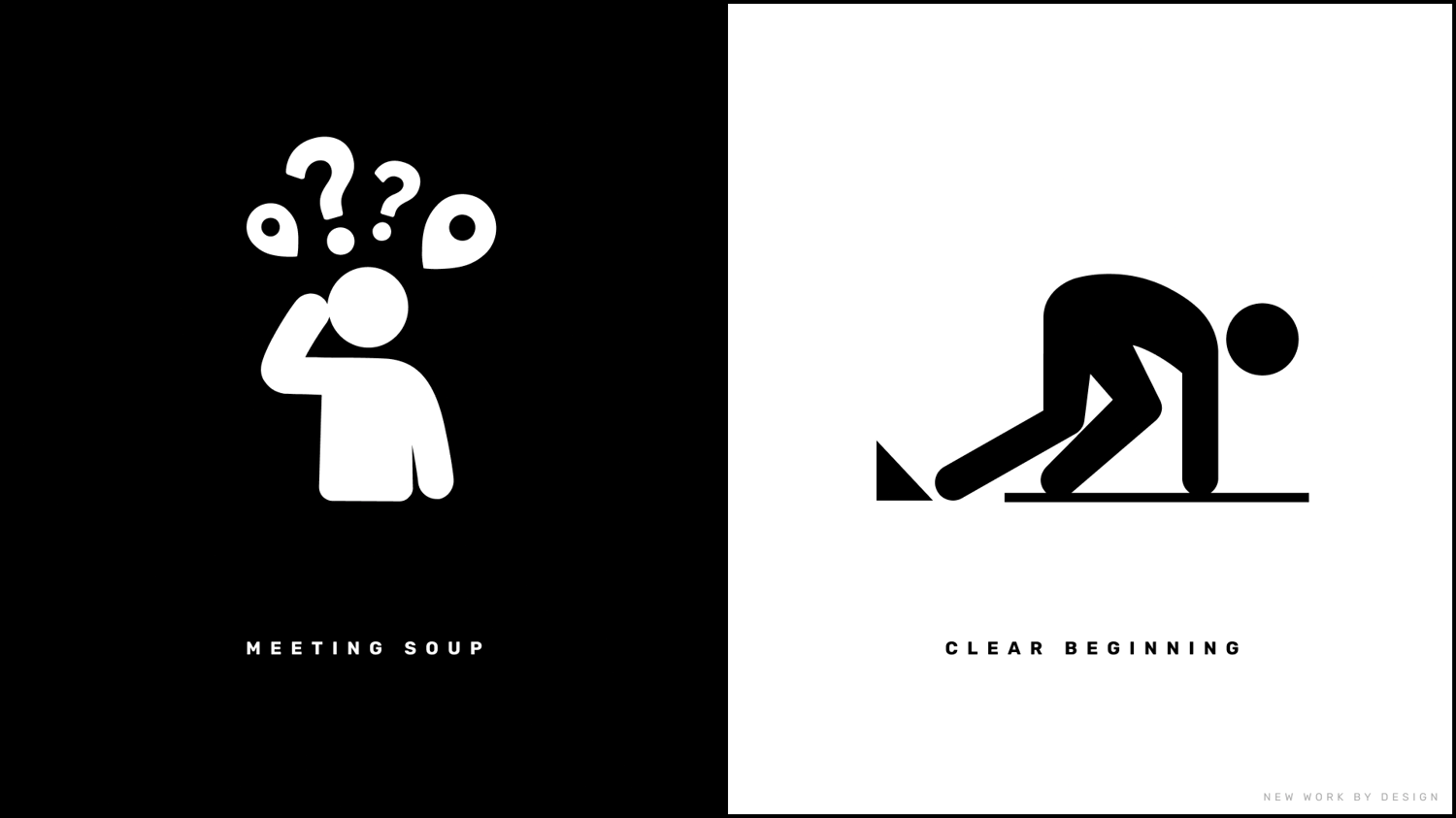
I would like to make the case for a simple practice that everyone knows, but often get’s skipped: Check-ins.
Check-ins serve as more than just an icebreaker. They mark the clear beginning of a meeting and set the tone for meaningful engagement.
When done well, they encourage:
- Mental Clarity: They provide a moment to let go of distractions, refocus, and mentally arrive at the meeting, boosting effectiveness.
- Authentic Presence: By creating space to acknowledge and share emotions, check-ins remind us that we’re more than our roles or to-do lists. This fosters a workplace culture where it’s safe to be human.
- Active Participation: These quick interactions get everyone mentally engaged, making it easier for them to transition into active contributors for the meeting's objectives.
Examples of great check-in questions
- What do you still need to let go of to be fully present?
- What emotions are present for you right now? (Hint: "tired" is not an emotion.)
- Is there any support you need from us today?
- Which two words describe you right now?
- On a scale from 1-10, what’s your energy level? How come?
Addressing common objections
Despite their value, check-ins are often skipped. Common objections are:
- “We Don’t Have Time”: We think, we don’t have time to do check-ins. However, after a check-in when everyone has fully arrived at the meeting, we will probably make up the invested time.
- Uncertainty how to handle it when someone does share that they are struggling: We worry about how to respond when someone shares that they are struggling and that this might take us off topic. This fear is based on the belief that we have to fix it when someone is struggling. The thing is, we don’t. Simply acknowledging and holding space for it already goes a long way. Ask: “What does support look like from us?”
A simple experiment
- This week, start your meetings with a check-in. Observe how they impact the group dynamic and focus.
- Try different questions and see which resonate most.
- Reflect: Did participants seem more engaged after the check-in?
If you want to receive visualized concepts like this with simple experiments in your inbox when they come out on Monday mornings, sign up at visuals.newworkbydesign.com
Comments ()