

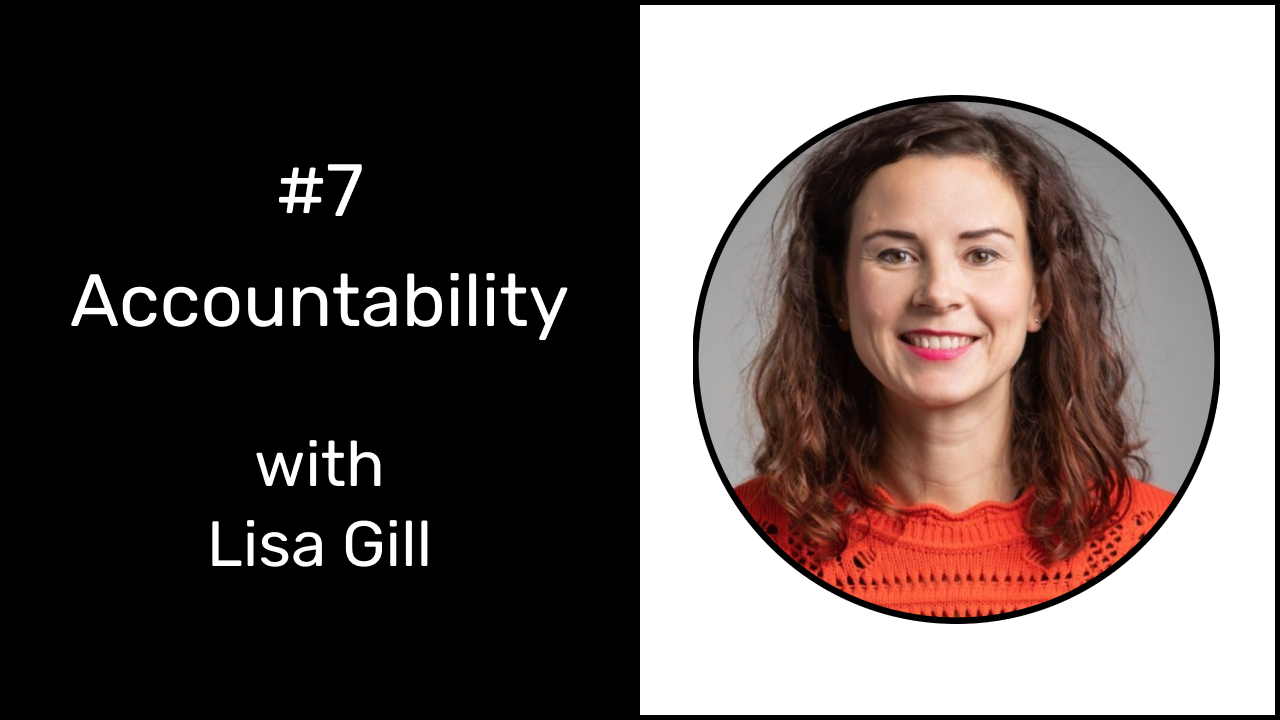
Most organizations struggle with accountability. Either they lean into punitive, shame-based systems that kill motivation, or they avoid the topic entirely and hope things work out. Neither approach works.
In this conversation, organizational coach Lisa Gill and I explore what accountability actually means in progressive organizations and why it's one of the hardest things to get right.
We discuss:
- Why accountability feels so uncomfortable (and what shame has to do with it)
- The paradox of choice and responsibility: you can't truly say yes if you can't say no
- How to make commitments relational instead of abstract
- Why explicit agreements are essential (and how to create them)
- The difference between blaming and supporting
- Practical tools like confirmation practices and self-scoring systems
- How to have difficult conversations without making people wrong
- Why true accountability is actually an expression of love
If you're building a more human workplace but finding that people aren't following through on commitments, this conversation offers a different way forward.
Key insight: Accountability without shame requires friction and discomfort. There's no system that removes the need for difficult conversations. But when done well, it helps everyone become bigger versions of themselves.
---
About Lisa:
Lisa is an organizational designer, coach, and host of the Leadermorphosis podcast. She works with organizations exploring more participatory and human ways of working.
Learn more: https://www.reimaginaire.com/
---
Mentioned in this conversation:
- Peter Koestenbaum & Peter Block - "Confronting Your Freedom"
- Doug Kirkpatrick - Morningstar & commitment keeping
- Mia Mingus - Disability justice activist on accountability
- Adrienne Maree Brown - "Loving Corrections"
- Helen Sanderson - Confirmation practices
- Frederic Laloux - Self-correcting systems
- Jan Carlzon - "People with information cannot help but take responsibility"
- Perry Timms - Performance Management as corporate bloodletting
- Karin Tenelius - Holding to account by coaching
🎧 Watch all episodes on Youtube or listen on Spotify, Apple Podcasts, or Amazon Music.
Transcript:
Manuel: Lisa, thank you for taking the time to have this conversation with me about, accountability, which is a topic that, I think plagues many of us in this space. 'cause it's, it's quite a tricky topic and we'll get into it, maybe why that is.
The reason I wanted to talk with you about it is that you posted a few weeks, maybe by now, already months ago, that, you're in the process of reshaping your thinking around it. So I'm very curious to find out what this new thinking is.
Lisa: Yeah. Thank you. And I'm curious to see what comes out of our conversation and what you've been noodling on around this topic.
Manuel: Great. how about we start with that what inspired that post of you saying you're changing your thinking around it. What new information did you discover that challenged your then current thinking around accountability?
Lisa: I think like many people who are exploring more participatory, decentralized, human, purposeful, whatever you wanna call it, ways of organizing, I kind of related to accountability as this kind of negative thing, this kind of hallmark of the old paradigm. And I think I was. as someone who's like, very freedom oriented, I like my freedom.
I don't like feeling, like oppressed or restricted. I think I was naive about the fact that, oh, if we take away these kind of dominate hierarchies and we have more equitable ways of relating to each other and making decisions and things like that, you know, we will just naturally be more accountable or more responsible. and of course, over the years I've realized that's not true. Like there's, there's something funny that happens even though you might be working with human beings who are, you know, competent, responsible, committed adults. bump into all of these weird things where people don't. we don't keep our promises sometimes or we drop the ball or we don't really take full mental ownership of things, even though we might be saying that we are. And this is the source of like most conflicts, I think, where it's like if we create these cultures that are more centered around kind of care and development and equality, what happens when the reality of being human beings and being messy creatures, hits us. Like that's all well and good when we're in harmony. But I saw so many organizations kind of stuck in this false harmony we don't, we don't really know how to have conversations about accountability, if not in the top down, old paradigm way. And so what I saw was happening often was that either people were sort of abdicating, like, oh, let's just sort of sweep that under the rug, or let's step around that, tiptoe around that, because we don't know how to address that and hope sorts itself out. And in the meantime, having lots of, you know, back channel gossiping conversations and it taking a lot of energy to not address those things. Or, I noticed that lot of groups were, kind of suddenly this sort of firm hand came down like, okay, now we need to, you know, the, novelty of this is over or the. You know, the honeymoon period is over. Now we need to like be serious and tough and firm and introduce some more structures or practices or something because, you know, 2% of people are not being responsible or something. So I saw these sort of, yeah. Traps I guess. And I saw them in myself too, that I was not good at confronting. I'm a people pleaser. I liked avoiding conflict. So I was, in the few times in my life that I was a manager, like a project manager, be that person that would be like, so Manuel, you getting on with, you know, the project? Think you're gonna make the deadline on time? Are you sure? You know, I was one of those passive aggressive kind of nice people and it always like me in the ass in the end. I. that's kind of a rambling way of saying that I kind of came to realize that I wanted to upgrade my way of relating to accountability, and I wanted to explore and kind of collect other ways of thinking about it to help people who were like me ending up in these traps.
Manuel: Was there any particular source that you found very helpful to kind of get to a new understanding?
Lisa: Two things come to mind. One was that, I learned about through Doug Kirkpatrick from, Morningstar, the kind of one of the poster child self-managing organizations. He's very passionate about commitment keeping. And when he talks about the culture at Morningstar, that's really what he says is like the main foundation of their culture and why they're able to scale self-management is because they're very, thorough about commitment keeping, commitment making and commitment keeping. he's inspired by Fernando Flores and also Peter Koestenbaum. And so there were a couple of books that I really, appreciated. One is, I think it's called Confronting Your Freedom is the latest one by Peter Block and Peter Koestenbaum. And of key thing that kind of like, messed with my brain a bit was the paradox of choice and accountability and those going hand in hand. So Peter Koestenbaum and Peter Block talk about like, you know, cannot be. You cannot really say yes to something if you cannot say no. Like your yes is meaningless if you don't also have the freedom to say no. And, and they also say price of freedom is anxiety because you have to live with the responsibility of the choices that you make. So that, like, that really, like that sort of created this tension in me of like, oh, that's, oh, those things feel like at odds with each other, but that really makes sense to me. and then I saw that everything in traditional organizations that we try to do to create accountability, performance management systems, for example, these like elaborate systems. That are built on the illusion of control and predictability and of these things. Some, some illusion of objectivity too. Like we'll put the system in place so that you can rate people based on their delivering their commitments and their responsibilities. And then we'll have a team that will calibrate those scores and put them on a distribution curve so that it's not biased and it's fair.
And it's like, completely subjective and arbitrary. And my colleague, and friend Perry Tims wrote an article recently comparing performance management to bloodletting kind of medieval medical practice of like, you know, any problem you had, it was like, put some leeches on you and they'll suck out your blood and that will solve things. And that persisted for a long time, long after we realized that was utterly useless. it's the same where these performance management processes, it's like we don't. Replace them, even though there's all this research about how ineffective they are, they're still happening in most organizations.
We haven't replaced them with anything because we don't know what the alternative is. And also I think because we're looking for some kind of sort of sterile, objective, convenient, comfortable alternative. And for me, you know, going back to Peter Cosmo and Peter Block, like there is no way to have accountability, responsibility, mental ownership, all of these things without some friction, without some discomfort, without having difficult conversations. there's no system you can design that will solve for that. So there's, for me also about this reframing how we see accountability. It's like also reframing how we relate to discomfort. You know, there's no model or framework that's gonna take that out of the equation. At some point you're gonna have to have those conversations. and then the second thing briefly is, I was listening to a podcast with a woman called Mia Mingus, who is a disability justice activist, and I found her, she was cited in Adrian Marie Brown's latest book Loving Corrections. and she was talking about this sort of social activism movement, you know, tho those people are interested in holding systems to account this lofty kind of goal of let's hold systems to account. but she was saying, if we cannot also hold each other to account like you and I as colleagues, as human beings. And then how on earth can we hold systems to account And then we have to practice that skill because we don't learn how to do that. So she has this great blog about how to, how to give her an actual real apology. And she has these different steps and part of that is like reframing accountability. She said this great thing of like, need to stop thinking of accountability as like holding each other to account and rather see it as supporting each other to proactively take accountability, which is for me, like a very different thing. So that got me thinking about, okay, yeah, how could we see accountability also not as a punitive thing. 'cause we usually talk about it as a thing of like. know, when someone's not doing what they're supposed to, if we rather saw it as like a proactive thing, and that if we create cultures of accountability, not just protecting the business or the system that's also helping individuals to flourish make, you know, make more choices and be really informed about the choices that they're making. my colleague Karen likes to say that coaching is, holding someone to account for who they said they wanted to be. So I love that idea. Like, yeah. Now I said a lot of things. What are you
Manuel: Yeah. well, many things, lots of it resonates of course. 'cause I think we, I mean, I follow your writing a lot and so many things you mentioned. I've, I followed up on, one thing I just realized that I hadn't this clear before is the 10 temporal part of accountability. 'cause I think you said something very important that often we, well we think of accountability as, oh, something went wrong and now I have to step in and.
Hold this person to account. and that is where it becomes difficult because something, a promise wasn't upheld just now. So now it's uncomfortable, but if I practiced accountability all the way before something goes wrong, it probably wouldn't have gone wrong in the first place. And if it did, it wouldn't be so difficult because we're in the process of holding each other to account anyway.
So it's just this time it's a bit uncomfortable 'cause it didn't turn out the way that we wanted. But, you know, we had 10 other, experiences leading up to this where it was fine and it was just holding you to account, was checking in and saying, oh, Lisa, yeah, you delivered the thing you want, you said you would great.
now what are we doing with this? What, how do we move on? and then of course there will be a time sometimes where it doesn't work out that way, but it won't be as difficult if we just practice it the entire time.
Lisa: That's a really good way of putting it. The temporal aspect. and so part of what I'm learning also is like, to look at the whole, kind of system or timeline of an accountability relationship. That was another thing that Minga said that accountability is It doesn't happen of relationships. Right. I. I remember watching a really interesting video a few years ago when I was sort of digging into some of this stuff. and it was a guy who was at the time working at LinkedIn, I think, I can't remember his name, I'll have to dig it out, the video, but was coaching, it was like a live coaching session that had been recorded with this guy who was talking about project he was managing and someone who had let him down. and this guy was coaching him to, to sort of see how, he had not been thorough enough in the beginning part, right at the start in clarifying what are we committing to. So part of it is like he was using quite strong language, and this is also what Peter Steinbaum advocates for, where it might be something like. Okay, Manuel, so this is the project that we have and I need to send this to the client by this deadline. And you have said that you can deliver x, you know, two weeks before so that I can review it. So I'm now relating to you having promised to do that. And the moment that you think that you may not be able to fulfill your promise, also counting on you to let me know as soon as you know, that then together we can figure out, okay, what do we do with this? So am I right in saying that? Are you, are you willing to commit to that promise? So he uses this language promise, commit, you know, to really like you in the hot seat of like, I'm checking, this is what I'm relating to you as having committed to. then you feel the person kind of going, okay, it's sort of like activates the more responsible part of them.
And then now we have this clear agreement that if you can't deliver it. On time, you let me know because that's better than like, you know, too late saying, ah, actually sorry, I'm not gonna be able to do that. I was like, okay, well
I have to like tell the client and so on. So it's like a much more, being much more thorough and like having a, not making an assumption of what commitment or accountability looks like to me, being the same as what it looks like to you, but really explicitly clarifying that. And then hope, you know, that reduces the chances that we'll have to have the conversation down the line, the uncomfortable one. Or if you don't live up to that, then we have a foundation for me to talk to you about that. So you promised me that you were going to do this and you didn't do that, and you know you have your reasons like that it, I'm not here to talk about right and wrong, but given that you haven't done that, how are you and how are we going to clean this up now? So again, I'm like relating to your accountability rather it about right or wrong, good or bad. So that was like a key shift for me.
Manuel: Yeah. So the two things that I, that resonate really well with me and that I kind of picked out from what you just said is one, is the clarity, just saying it out loud, like, I understand this is your promise. Do you commit to this? Just we happens so rarely, right? like we go through this big goal alignment exercises, but we never, and you know, if it's done well, there is a clear goal and there's metrics and that's all there.
But it's never, and that's the second part. It's never made relational. It's like you're promising this to me. This is not an abstract thing we're doing. This is not just a document where we write letters in that hopefully makes sense at the end and numbers, but this is a relational thing. I'm counting on you.
and if you don't deliver, then. You're letting me down. 'cause then I can't do the thing that I may be promised to someone else. and I don't think I've ever seen that done on that relational level. What do you think keeps us from doing that?
Lisa: One thing is that we don't, we don't learn how to do it. I mean, we really don't learn how to do relationships in general. think it's, you know, in school. The in school and workplaces, the version of accountability we learn is again, in this parent child dynamic that you and I talked about last time I was having a conversation with you. it's like my teacher holds me accountable and they tell me what I need to do and when I need to do it by, and so on. So we kind of learn this very, we don't really learn how to really be accountable or how to hold each other accountable. so I think that's one thing. So it's the same way that we don't really learn how to make decisions either.
So when you, when you decentralize decisions, we realize, oh, we are making decisions all the time and we're never thinking about how are we making decisions? Which decision method are we using? And is that the right one? I think it's the same with this. It's like we're, it's invisible to us. All of the assumptions we are making. It's like, I was coaching someone the other day who was saying they had managed this project and they had, I could tell they were someone like me that's like, very, like a good girl. Like organizes everything, anticipates all possible variations. But you know, she had built in check-ins with in the team to make sure is everyone like, you know, on track and then still a person in the team didn't deliver on what they were supposed to and let her know quite late. then she was like, well, what, like we had an agreement that, you know, I was having all these check-ins. Why didn't you tell me sooner? we make an assumption that my version of what works for me also works for you instead of making it explicit, that relational thing. So my version of accountability, my version of communication, my version of collaboration. Will be different to yours. So what I experience as like thoroughness and opportunities to check in, you might experience as micromanagement or unnecessary or, so then we have to navigate and it will be different with different people. Like what works in one context won't work in the other like, here's what I need to feel like you've got this and we've got this. Does that work for you or not? And then someone might say, well that for me feels a bit like you are checking up on me, but what could work for me is if we did this. And you kind of negotiate that, you know. And the other thing I remember watching, a video of Frederick Lalu a few years ago when he did these insights for the journey videos. was talking about self-correcting systems he gave an example of a hospital where the CEO had said to him, there's this one team who is. Really, like under-resourced. They're like, they have too much, too much of a workload and not enough people. They're like, you know, exhausted. And this other team has all this spare capacity, but they're not stepping in and helping them. she was asking him, how do I get that team to help the other team? And, and he said, what you need to do is, rather than you suggesting something or solve, trying to solve something, won't really create a self-correcting system or like true accountability, you need to get the teams to kind of directly experience the pain. So she then organized a meeting with the two teams, and the team with the spare capacity heard directly the pain that the other team was in. And then without any prompting, of course, volunteered, well, hey, we have spare capacity. Let us help you. So I think a lot of times, if you're a manager or a project manager or whatever. When people aren't really fully accountable, it might be because there's something in the system that is disconnecting them from the direct result of what they're doing. So they don't know necessarily that if they don't deliver that thing on time, you have to go and tell the client and disappoint them and deal with the pain of having to reschedule it.
So you have to say that explicitly or connect them into that directly. So come with me to the client meeting and you can hear what they need and understand and, you know, feel connected to them relationally. So you don't just see this as a, oh, if I'm a day, what's the big deal? You understand? I know that is a big deal because of what we've promised and what that means, the knock on effect of that feeling the direct result of what you do. I think this is also the problem with hierarchy sometimes is important. If I know the impact of me making that choice, then I'm more likely to make a more responsible choice.
Manuel: I think that not seeing the effect of what I'm doing and it being abstract, makes it easy to not follow through, or not to do an action that would be beneficial. Right. And that's, you know, that's everywhere. It's like just seeing the amount of food we waste is because, well, we're not growing it, we're just gonna supermarket and buy it.
But if I grow my own cucumbers and tomatoes, I don't throw these away, because they're very precious.
Lisa: Yeah. And another that makes me think of another thing, Jan Carlson, the sort of famous CEO of, Swedish, what do they call it? The Scandinavian Airlines. He had this great quote where he said, people without information cannot take responsibility with information cannot help but take responsibility. And on that note, I remember being in a hotel in Sweden at the breakfast buffet, and they had a little blackboard that said, this amount of food was wasted in the past week. And each time they would write in how many kilograms I think it was, of wasted food. So they said, you know, so bear that in mind when you pile your plate up with food, whether you are going to finish it or not. And I thought that was such a great way invoking responsibility. you know, take as much as you want, but be mindful you know, we waste a lot of food. So, maybe start with a smaller plate and then see how you feel. You know, it really activated my sense of responsibility just by sh showing the data, you know?
Manuel: yeah. That's a beautiful example of just very simple, like, you know, it takes next to nothing other than actually measuring roughly what the effect is and letting people know. Yeah. one thing I wanted to add to when you said, you know, we're not taught how to hold people to account similar, like we're not taught how to make decisions and other ways of relating.
One thing I think that makes accountability particularly difficult in this regard, is something you touched on, but I wanna make it explicit, is that it's often, or usually when we experience it, is in the, in the punitive paradigm. So it has to do with, are we finding someone to blame who did something wrong and then they're punished?
And then that comes with shame. And I think that makes it so difficult even to hold someone else to account because we know shame is involved and we don't. Shame is really bad. Experience, right? We want to like avoid that at all costs. And certainly if I care about my coworkers, I wanna avoid that they feel ashamed.
So I suddenly have difficulty holding them to account because I'm projecting on them. When I do, they will feel ashamed and I don't want that to happen. it's actually I have an, a whole module on my leadership course on accountability, and I call it accountability without shame for exactly that reason, because I think that's the key point. If you manage to do accountability without shame, then the bar is much lower.
Lisa: Yes. Yes. I love that. Yeah, I think that's so true. And one of the things that Mia Mingus was saying on this podcast that I liked was she was saying it's really helpful to of reveal how we relate to accountability. So she suggested like a really simple practice that she does in her courses where, you know, if she has a course over a number of weeks, she'll get people to partner up with someone and share something that you want to be accountable to yourself for. So I might say. Manuel, I want to hold myself accountable for, drinking one liter of water a day. 'cause I don't drink enough water. So that's what I wanna hold myself accountable for. And you might say, I wanna hold myself accountable for making sure that I move for at least 30 minutes every day. Get more movement. And then, we would check in with each other, you know, the following week and the following week. And notice, you know, when I ask you, so how's it been going with your movement? And if you say, well, actually last week I didn't do so well, you know, I only managed to do this and I was just a bit tired and how do I feel when I hear you say that? Do I feel like I want to, kind of take care of you? Like Yeah, I totally get it. It's hard, isn't it? And like, you know, no worries. I'm sure you'll do better next time. Or do I want to, of shame you? but you said you were gonna do this, so it sounds like you're making a lot of excuses, Manuel. You know, do I, do I have the courage to you accountable for what you said you wanted to be accountable for?
Or do I let you off the hook? Does it bring up feelings in me? And as I share my progress, you know, if I didn't manage to do it, do I feel shame? Do I feel guilt? Do I make excuses or, you know, do I hold myself to high, really high expect, you know, all of these different things? So noticing on a, on a micro level, how do we relate to accountability and practicing that just that small example with another human. And from that awareness, as you said, can be like, okay, so my version of relating to accountability is like, I straightaway go to shame, or a straightaway go to this, or I totally avoid conflict, and what am I missing out on as a result of that? What. Development opportunities. What relational opportunities am I robbing the other person of By prioritizing my comfort over their development.
Manuel: Now, what do we do with this? Let's assume I am the founder of a company of 70 people, and I come to you, Lisa, and say, I watched this conversation you had with Manuel, and this all sounds great with accountability.
That makes so much sense. What do we do? How, how can we make this a lived experience?
Lisa: Yeah. And it's all well and good, like waxing lyrical and philosophical about this, but how do we actually make it happen? Yeah. well, one thing that's quite present for me, because I joined a webinar yesterday with, Sanderson. Do you know Helen Sanderson? Mm. So she was, yeah, through me. I'm like her biggest fan girl.
I'm always talking about her. she had a, she hosted a webinar about, she's been doing a kind of an experiment where they've had an independent researcher, following it for the last nine months where they've been working with a number of leaders in organizations, to help them with. Practices around one-to-ones. she's, she's a big advocate of something called confirmation practices, which is a sort of tool, if you can call it that, developed by a guy called Andy Brogan, who's very humble. So he rarely talks about it. He's like this humble inventor that, but the idea is confirmation practices are basically a sort of set of statements that you create for yourself or co-create with your colleagues that you can measure yourself against on a regular basis.
And you have a practice of having a conversation, a reflective conversation with someone, a coach, a mentor, a colleague, your manager, whoever, to support you to.. Basically be proactively accountable for things. So for example, in this webinar, they had, an example of a woman who was actually, she was the CEO of her organization. And so they had confirmation practices for her role. In my role, these are the different responsibilities I have. And, what I actually do in that role on like a daily, weekly, monthly, quarterly basis is this, like making it very specific. And what good looks like is I would be doing this, people would be noticing this, I would be seeing results like this and so on. And then you score yourself from one to five, how. did you live up to that particular commitment? and then there's a series of questions that your partner can ask you to help you reflect on that. So what score did you give yourself and why? What was missing for it to be a five? What can you commit to in the next two weeks would increase your score in that area? And so you can do it both for roles but also for, team agreements. So the other example she gave was, psychological safety, is this again, kind of a fluffy buzzword that's like Yeah. Psychological safety. Yes. Yes. We all nod very seriously. It was like, okay, but how do you actually do that in practice?
And one possible way is to like, is to do a practice like this where you have statements and she has like examples of statements for each one. like I can get them up actually if it's helpful.
That again, you can kind of score. yeah, here we go. So it was like, oh no, not that one. This one. So it was things like, I am confident that each of the team knows what is expected of them. I am confident that my behavior supports team members to know it is safe to take thoughtful risks. I am confident that I act in ways to ensure that nobody on this team would deliberately act in ways that undermine someone's efforts. I'm confident my behavior encourages and supports people to say, I don't know, et cetera. So there's like 12 different statements, and so that's a way of like, you know, you as an individual or you as a team can, you know, on a regular basis, review these things and say, where are we? Oh, on that one actually, I'd say we're a three. Okay. what can we commit to? to change that rather than leaving it to chance or, you know, or, you know, slipping up on our commitments. So, you know, whether or not you use that specific tool. I think what's helpful is, like we've talked about making it explicit. What are we committing to, you know, as me, as an individual in my role, us as a team, how we wanna be together as a team, good looks like, how we give each other feedback.
The more explicit and clear we can be about what we're agreeing to and committing to, the more likely it is that we will live up to those commitments. Because I know what I'm committing to. I know what I'm saying yes to, and the easier it is. not comfortable, but the easier it is for us to talk about it when we don't live up to those promises we have a clear understanding of like, okay, so we all said we were gonna commit to this, and that's not happening, so let's talk about that. it makes it easier to put the elephant in the room and talk about it. And it kind of has to be, to be like a constant, commitment. Like my colleagues and I in tough, we have very regular conversations of like we have a commitment to bringing up what we call pebbles with each other, or moose heads when they're interpersonal tensions.
Or we have a really strong commitment to having a clean climate where there isn't, you know, unspoken frictions. And we regularly have to kind of call each other in when we see that we are not living up to that, you know, like. We'll say when something gets brought up, I'm like, why didn't you bring this up sooner?
Or like, we have this commitment, remember? So it's not like a one and done thing. It's not like a once or twice a year thing. It's like a constant vigilance of keeping alive. This commitment culture.
Manuel: I really like that, the, like having these particular questions that you can just go through and ask because I think that is, well, what keeps I. I think most people who, you know, would listen to this and agree, with the general sentiment from actually implementing is that it's like, yeah, but how do I do this?
I don't know. And then, you know, everyone's busy and then you forget about it. but if it, so I think what it takes is a very simple practice to then just do it. And, and I specifically say simple doesn't mean it's gonna be easy, but you know, it's so simple. It's like I know exactly what to do, I know exactly what the steps are.
and then I think it can actually happen. And what I particularly liked about the way you described is that people are self scoring and that also makes it a lot easier. 'cause I hopefully most people will be somewhat accurate in how they. Self evaluate. and then you can just have a conversation about that and maybe they're even harsher to themselves than I see them.
And then that's the easy part where accountability actually feels like support is like, no, no, wait, let me put things in perspective and here's what I'm already seeing. Maybe someone's overestimating, how well they're doing. And that makes it then more difficult to say, Hmm, you know, actually, have you looked at this thing?
But it's certainly easier 'cause you're already in the conversation and you can point to a specific, phrase they used or expression or a way of describing. whereas if this wasn't in place, I have to think of, well, how do I address this now? And, you know, when is a good time and how do I start the conversation?
And all that falls away if we have. Just a ritual of we're going through these questions. but here's, here's exactly where I then see the next difficulty coming up. How does this not become stale? And just motions we go through that become meaningless and we just, it feels like bureaucracy in another checkbox we need to take.
It's like once a quarter we go through these questions. Ah, those again. How does it not become that?
Lisa: Good question. I think what's coming up for me and what I was also thinking as you were talking is like, is like purpose and reconnecting to purpose, always the purpose of why we're doing this. 'cause I was also thinking about quite often what, traditional organizations do with, for example, performance management processes is kind of blur together, the purpose of accountability and development and sort of like. There's a sort of disguise, it's like performance appraisals, therefore your development really. And it's like, well, if they were, you know, maybe they wouldn't be attached to salary or, you know, it wouldn't be decided top down and so on. it's like, let's be clear about what is the purpose of different things.
If you wanna, a process that helps people with their development helps them reflect on how they wanna progress, that's a very different system to a system where we want to, have clear rituals for creating feedback loops of how are we doing? Are we on track? Are we sort of living up to the things we committed to and are responsible for? You know, those are two different things. so being clear about what the purpose is. So I think if things start to become stale, I think, being able to talk about that and say. Name, I think this has become stale. Can we check back into the purpose of why we're doing this? Do we still agree that's important? You know, maybe things have changed. Maybe, maybe. The other thing I like is like Mickey Cash Tan, who is another person I'm very influenced by. She talks about, that we, for things that are difficult, that we don't yet have, you know, the full capacity to do like interpersonal risk taking, some of these things, that's when we need agreements. that we do naturally. And you know, we have the capacity for, we don't need agreements for that. We'll just do them anyway. But when you make agreements, you might then upgrade your capacity and realize we've integrated this. We don't need it to be an agreement anymore. So if you can review the purpose of things, then you can say. we still need this? Maybe we don't. Maybe it served a purpose for a time and we no longer need it, or we can say, no, it's actually really important that we do this, I think we need to recommit to it. So what's needed in order to do that? And then I think, you know, what we practice in tough, for example, is people need to have, given space to voice their concerns, protests, skepticisms, difficulties with something, and feel heard in that in order to recommit to something. So we, I'm trying to think. We had a conversation recently where it was like, I think it was about sharing our takeaways. Every time we run a course, we have a commitment to sharing our takeaways from what we learned, delivering that course so that others can learn from it. You know, I tried this exercise or I did this and it went really well, or that went terribly. Or what I'm learning about myself is, and we had a conversation about that. Some people were doing it and some people were not. And we talked about the reasons why. Oh, it's difficult when I finish a course, I'm tired and I'm not someone who's naturally good at writing. That's not how my brain works. I need space for everyone to feel heard in that and for that to be valid. And again, like not being in this punitive, right, wrong of like, well, tough, you're just, you are a better person if you do it anyway. It is like, no, it's, it is difficult and some of us find it easier than others. Do we still agree that it's worth committing to? And everyone was like, yes, it's really important for our culture. So I think we do need to recommit to it. And then, okay, so what do we need to recommit to it? And, and it shifted something and we'll have that conversation again, I'm sure in like six months, a year, whatever, like, so it's to keep having those conversations.. And again, not making it about right or wrong, but acknowledging how challenging it can be as a human being to commit to things that are difficult and reconnecting to the other thing I wanted to bring in was, we're talking about here is like, sort of embarrassing that it, many indigenous cultures have been doing this for thousands of years, and you and I are sitting here like, oh, you know, new ways of working movement is wrestling with it. And, and there's some great stuff in, enticing Young Ka Porters work has written a couple of books and some papers on this topic. And, yeah, like aboriginal, many aboriginal cultures have been practicing stuff like this for ages, which is like, is all about our commitment to being in right relation with each other, with the collective, with the earth, et cetera. and so they tend to have much more, in my opinion, sophisticated practices for holding each other to account, and they do it in a way that's much more relational, that's both tough and empathetic, have all of these, you know, very brilliant systems for doing that we could benefit from learning about, I think.
Manuel: I guess that's just, the work of our times in Western society, often very individualistic society to rediscover all these relational practices. and. Try to fit into our current reality. 'cause Yeah, I mean, as much as I agree with you, it's like, oh, you know, they've done this for thousands of times.
Why are we so stupid? And don't do it? It's like, well, different context. If we were brought up in this society, you and I will probably be much better at holding people to account and being held account. but that's, that's not where we are. so, I guess what I'm saying is, for us in our context, it is new ways of working.
And in our, in other context, it's like just the way things are.
Lisa: Yes.
Manuel: and there's again no shame in that, right? We have to play the cards we've been dealt.
Looking at my questions here, I had eight questions and we did one and two, we went on in a long rabbit hole, but that was, I mean, that's totally fine, right? That's actually the more interesting part. but one thing I wanted to touch on is, hearing from you, what does it feel like when you're held to account and it's done well, whereas opposed to when it's not done well, maybe with good intentions, but it's not done well, whatever that means.
Lisa: Yeah, I can remember, years ago when I was doing an internship at a company, I, one of my jobs was to stuff envelopes with newsletters and send them out to, members of this organization. And, on one occasion, I missed a step in a process that meant that we paid the postage for those. Letters. And I came in to the office, the next morning and there was a post-it note on my desk the manager wasn't in that day saying, you did not do, put the correct post-it on this thing.
And I'd been on the phone all day to people calling up saying they had to go to the post office and pay 50 P for a newsletter from us, and it's embarrassing. Da da. that was like accountability through a post-it note, which didn't feel good. And, you know, no shade to that person. They were doing their best at the time.
But, but I remember feeling deep shame when that happened, and there was no relational aspect me to kind of, regulate again or with the system or anything. So I just felt deeply shameful. so that was like a bad example and a good example. I have so many, I mean, I'm so grateful to my colleagues in the context that I work in because I think we have become really good at this holding each other to account, whether it's like bringing up things, kind of giving each other feedback about ways of being that, are not in line with our commitments to each other in how we communicate and things like that. But actually what's coming up is an example of, my partner Sean, who told me some years ago, I was talking about my sister, my relationship to my sister, and he said to me like, can I, can I say something a bit difficult and I'm coming from like, wanting to support you and I know you love your sister and so this might be hard to hear.
And I was like, yeah, please. And he basically told me that he saw that I had a tendency to relate to our relationship as. More about fun than about really asking her how she was, how she was doing or being there for her in the difficult times. And I was like, oh, that really, that hit me deep where I was like, oh my God. I was like, wanted to call into question like, oh, am I a bad sister? Am a bad person. But where he was coming from was so much about, was so much coming from love. Like, I want you to, I know you wanna be a good sister and I see something that I think is like a blind spot for you. and it changed my relationship like forever with her and in general like with a lot of people.
'cause I was someone who would avoid those difficult conversations. So when you, when you have a good one of these conversations, I think the sensation is, it's not necessarily fun. It doesn't necessarily feel good. But you know it often feels heavy. It often feels, oh, you know, like you feel the weight of that and you feel like respected that person is relating to the bigger version of me that I want to be. And if someone can do that for you, it's like one of the greatest gifts. Like that for me, has been my reframing of accountability. It's not like telling someone off, it's not shaming someone, making them wrong. It's actually, I'm relating to the best version of you or the biggest bigger version of you that I know you are and can be. And if I didn't say this, I would be robbing you of that. I would be prioritizing my comfort or your comfort over your freedom, power, development, whatever you wanna call it. Like that for me is the potential of. Of really having a culture of accountability. It's like that we all flourish, we all become bigger versions of ourselves.
Manuel: I particularly liked how you started this and I see a pattern, I think most, or I've seen or and heard from stories and own experience when accountability is done well, it seems to start with this, "Ooh, this is difficult for me to say and, but I'm doing this 'cause I care about you and how you maybe relate to others"
Lisa: That's the commitment thing. Again, like I'm committed to you being great, us having a good relationship, us doing the whatever, and that's from that place that I say this.
Manuel: There's particular phrasing that's used in that moment, but I think even more so, I can feel it in the tone. If you're attuned to that, you know exactly what is coming. There is a sort of tension in the room that you can sense then and makes you immediately actually listen.
It's like, all right, this seems like it's gonna be important, what I'm about to hear,
Lisa: Yes.
Manuel: and then it's, and then it actually lands.
Lisa: And listen, you say the word listen. That's key too. That I think is totally missing from the accountability paradigm in the traditional world. like, it's a one way thing. I am accountable. I tell you, you do this or you didn't do this. And then it's like, but what? What happens after that? You know? And after that it's like. That person needs to feel heard. And that's how we, part of how we, you know, part of it's where we come from, our way of being, our tone, our agreements to each other. And part of it is then how we are with each other, in the aftermath of that, which is I can listen to you and how you feel hearing me say that. Like, oh, that's hard to hear 'cause I really, I really am committed and responsible, but I see that I let you down and that's tough. That's not who I wanna be. And I can listen to you in that. Yeah. I really get that wasn't your intention, that it's not easy for you to hear this and this is not, yeah.
This is hard for you to hear. I get that. And being with that person in that also, I think then transforms it from that shame thing into an opportunity for development and learning whether it's about our relationship, trust that person and their personal growth or whatever it is.
Manuel: Yeah, absolutely.
I think that, again, that is what makes it so difficult. So even if I get to this step, just seeing you in pain, even if it's not shame, but it's like, oh, that was difficult to hear. Now what does that mean about me? And when have I done this? And so forth. And just being able to hold that space and stay with you, that is just really difficult. 'cause it's very vulnerable, right? It's an actual intimate moment.
Lisa: Yes,
Manuel: in particular at work, we feel uncomfortable with that. It is like intimacy doesn't belong here, right? That's something that's not considered professional. and I think that seems like a, I think as society, how we think about work, there's a lot of way to go and grow there until we can say, yeah, we are there, where we can have these intimate conversations.
Lisa: Yeah,
Manuel: we're at the top of the hour. Do we have time for one more question?
Lisa: I do.
Manuel: okay. 'cause how I would like to round this off is to kind of get a sense of what is your current thinking edge around accountability. Maybe what is a question about accountability that could, coming back to that you don't have.
Like the full answer to maybe you have a, like, you know, a cookie cutter answer that you give, but you don't feel completely comfortable with it. It doesn't feel quite finished.
Lisa: What a great question. I think what's coming to mind is like, I've been posting a few things about this topic and related to this topic, as you said on LinkedIn. and I posted something earlier this week about this thing of wholeness, bring your whole self to work. Because I read this article that was. Kind of pushing back against that a bit.
This person was saying like, I worked for this tech company, and they were saying, bring your whole self to work. And I was a bit like, ugh, get away from me. I'll, because it, they were sort of saying that there's a risk when you say that it becomes performative. That you start to question like, am I being authentic now?
Am I bringing my whole self to work? Not to mention that it's easier for some to do that than others, and like, what does that actually mean? And all kinds of things. So I posted something about it and I noticed in the comments that I got, I think it came across that maybe I was, criticizing that saying that we should just, know, burn that whole idea.
Like wholeness is a fluffy, silly thing and let's get rid of it, but I'm actually not. not against that. And I think like sort of learning edge with this stuff is like how to talk about, I'm very aware that talking about this topic, there's like a, can be co-opted, I think by people who are like, oh, good. Finally, someone said like, we need to stop pandering to these Gen Z people and like blah, blah. And, and I don't want that to happen. For me, it's like, how can we hold these, this both and thing, this tension between care accountability that they're not, it's not one at the expense of the other that both can be held at the same time. So accountability doesn't have to be tough without the. Empathy without the love or whatever. And, to have caring organizations doesn't mean that then we can't have accountability. Like, I really wanna find a way of expressing that tension, dynamic tension between the two things and how they compliment each other rather than being misconstrued, as saying, yeah, wholeness and all of that stuff is silly and fluffy.
And see, I told you it wouldn't work. I don't know if I'm expressing that very well, but I'm realizing that I, that I wanna be careful about. yeah. Accountability. I think true accountability, and this is going sound fluffy again, but I think true accountability is like the ultimate expression of love. Like if you really, it's like those friends you have that, you know, They will listen to you and, care about you. true friends, you know, also will call you out if you are doing something questionable. Or they'll be like, Hey, can I call you out on something? And, and we love that. That's true Love, I think. so I'm trying to find some way of expressing that Yeah. That both and thing as a way of getting out of this either/or trap.
Manuel: Yeah, that makes sense. Mm. I don't know if this will sell well, but I think you just said it. The accountability as an expression of true love. I think that captures it really well.
Lisa: Yeah. There's a nice phrase in Irish and Gaelic and Amra, which means Soul Friend. and it was in a book. I forget his name now, John something. and that it's exactly that. It's like the friend that holds the mirror up to you and sort of, you know, gives you that tough love sometimes. I think that's, you know, in an organization, if we're taking it seriously when we say we wanna be a learning organization and all of that kind of stuff, that's what it means. It means, it means like holding the mirror up to each other in a loving, challenging way.
Manuel: This seems like a good spot to end and wrap this up. Thank you, Lisa, for spending this hour with me. I thoroughly enjoyed it. I think even more so than our first conversation, it felt even more, you know, comfortable and natural. so I. I might call you up again for another topic. You actually touched on something and I had to bite my tongue, to not go down that route because I'm currently completely rewriting how I think about performance evaluation.
Not completely, but substantially. And you touched on that and I was like, Ooh, I need to pick your brains on this. What do you think about, so there might be another one of those coming up in Q1 if you're open to it.
Lisa: Yeah. I love these conversations. I love, you know this, I say this a lot publicly. I love your brain and I love your soul, it's, for me, very generative, like thinking out loud together with you. I, it really contributes a lot to me, so I'm really grateful for these chats and I really, I like you.
I think this one was, I enjoyed it even more than the first one.
Manuel: Same here. I thought about this topic for many times and for a long time, and still when we talk about it, there's some new things that are sparked and new connections that are made and new aspects when nuances to uncover. So I really appreciate it. I'm glad you feel the same.
Lisa: I do. Thank you.
Comments ()